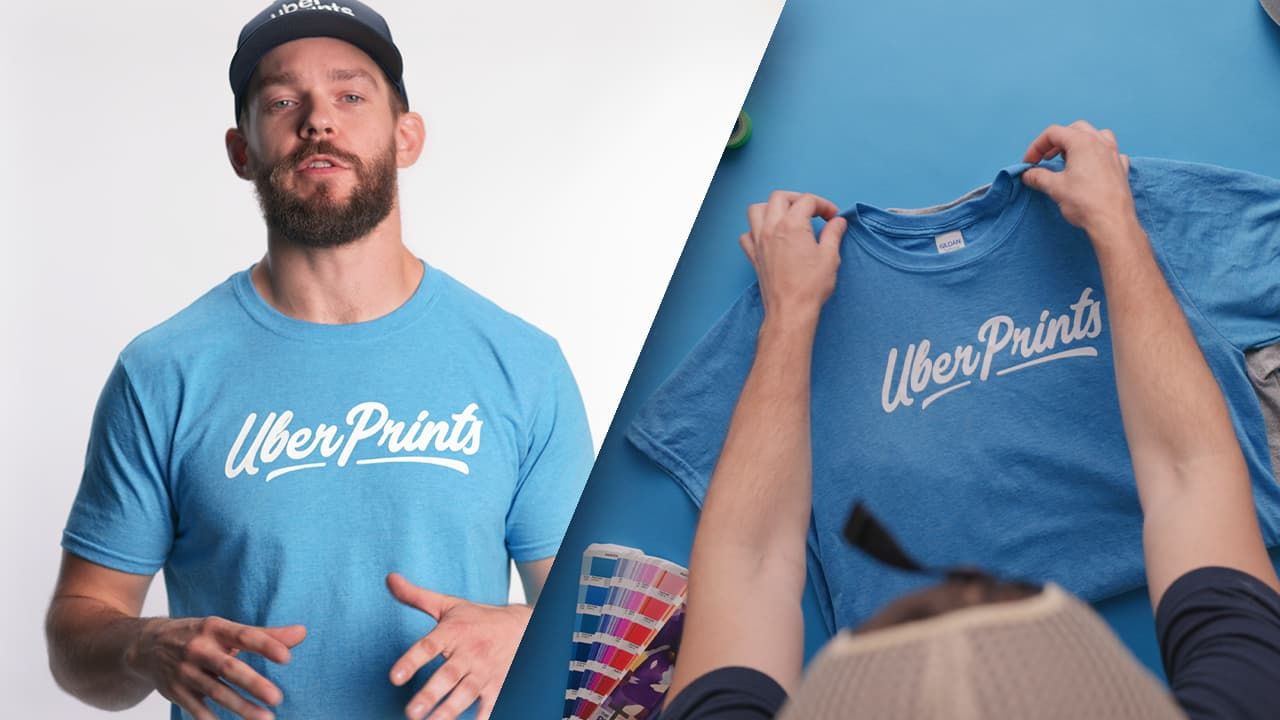

For those hunting for where to get custom printed t-shirts that won't empty your wallet, I've made this guide to highlight what we think are the best cheap custom t-shirts. We've selected two huge best-sellers to showcase and compare: our Basic Tee and the Basic+.
These two styles are major standouts for us because they're repeatedly the go-to choices of so many of our customers, not to mention our own when we're looking for cost-effective options for our designs. So let's take a deep dive into what makes these styles so popular, what sets them apart from other custom t-shirts, and how to decide which is going to best for you.
Watch the two-minute version
The video puts both shirts side by side so you can see the weight and the cut in real light, which is the part that never quite lands in writing. The numbers are below — color counts, ounce weights, and the ordering scenarios worth having in front of you while you build the order.
What are the best cheap custom t-shirts?
We stock dozens of blanks that qualify as budget-friendly. Two of them account for most of the orders in our cheap custom t-shirts category, and they're the two worth putting head to head.
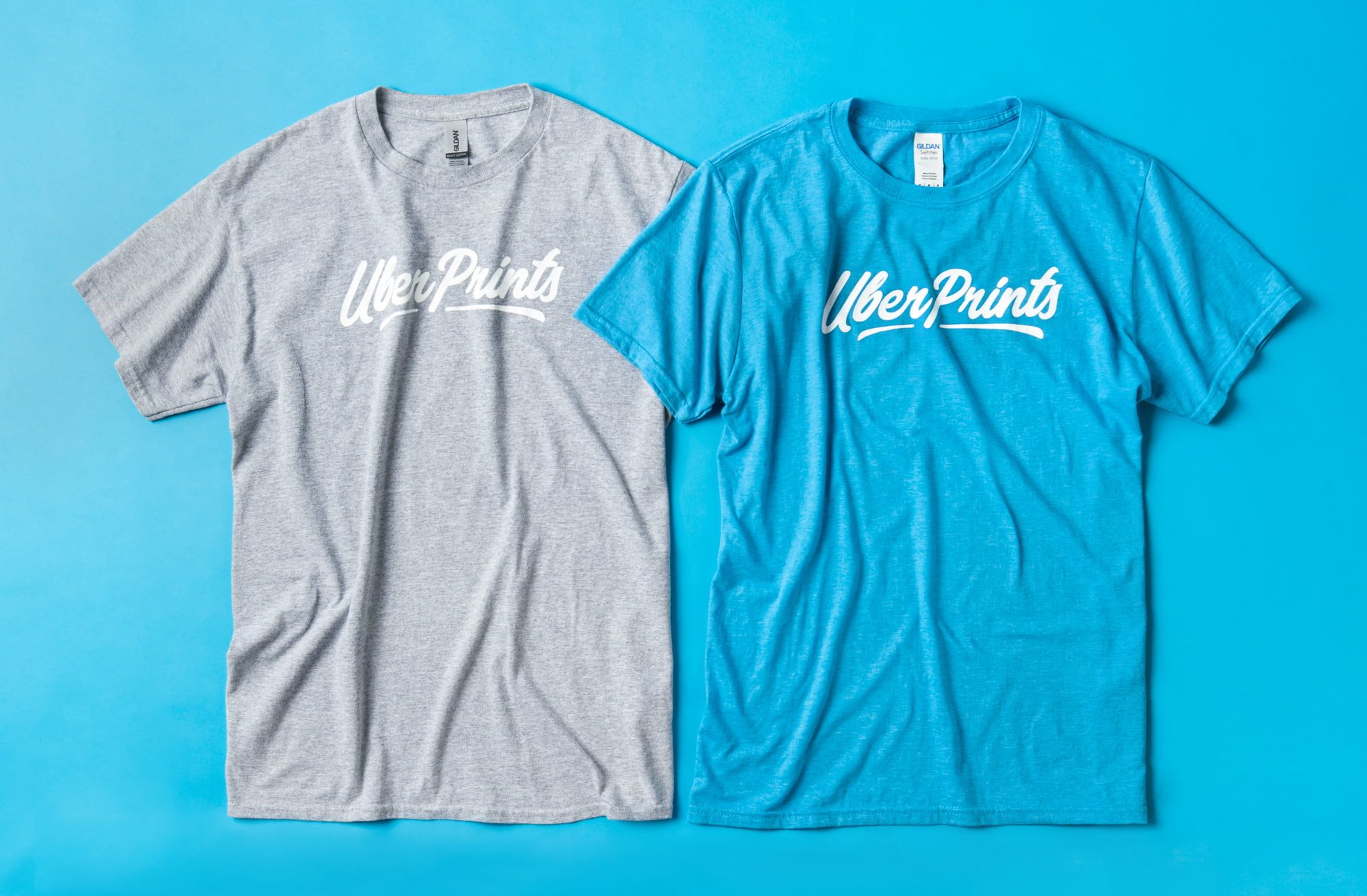
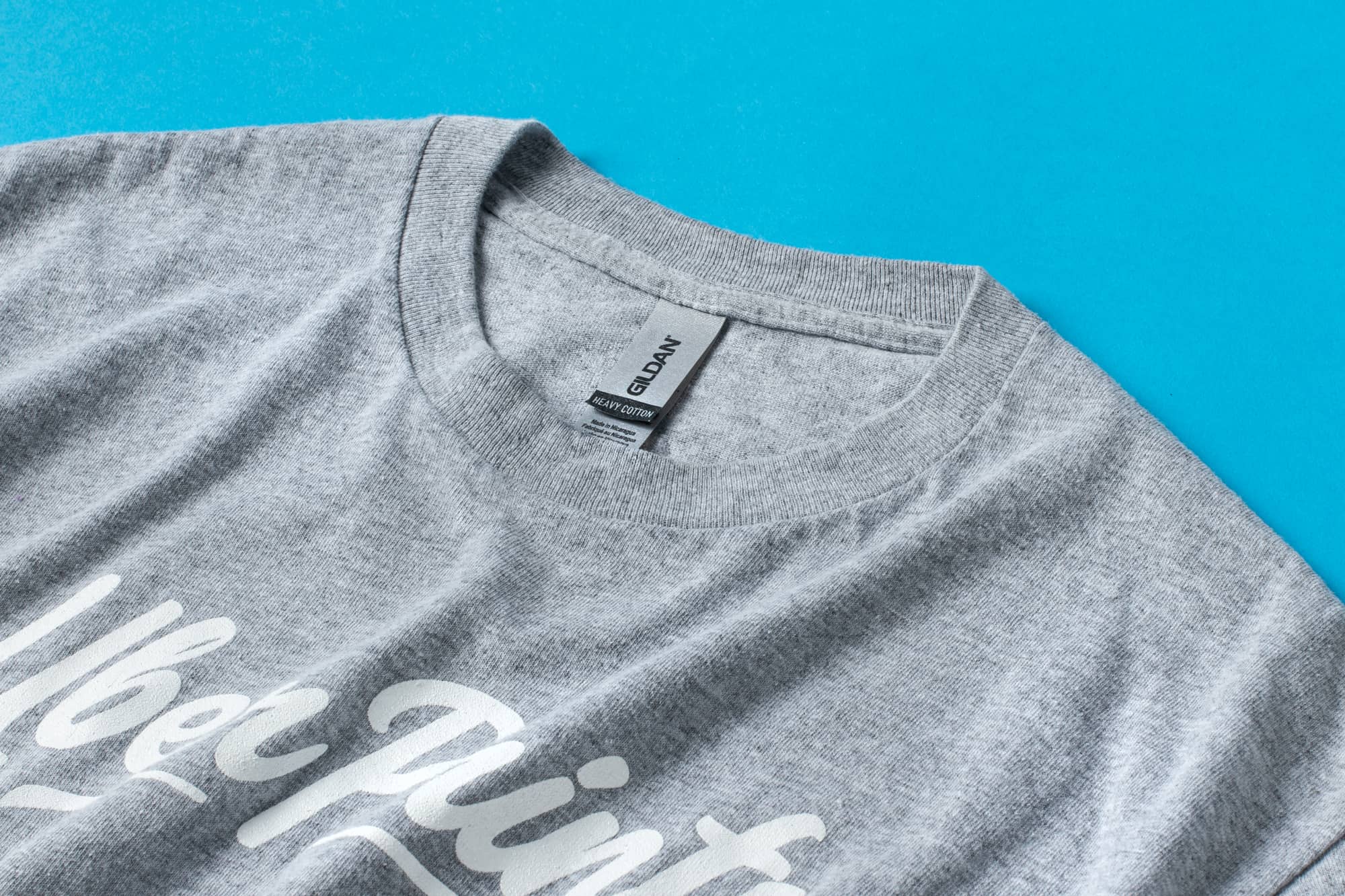
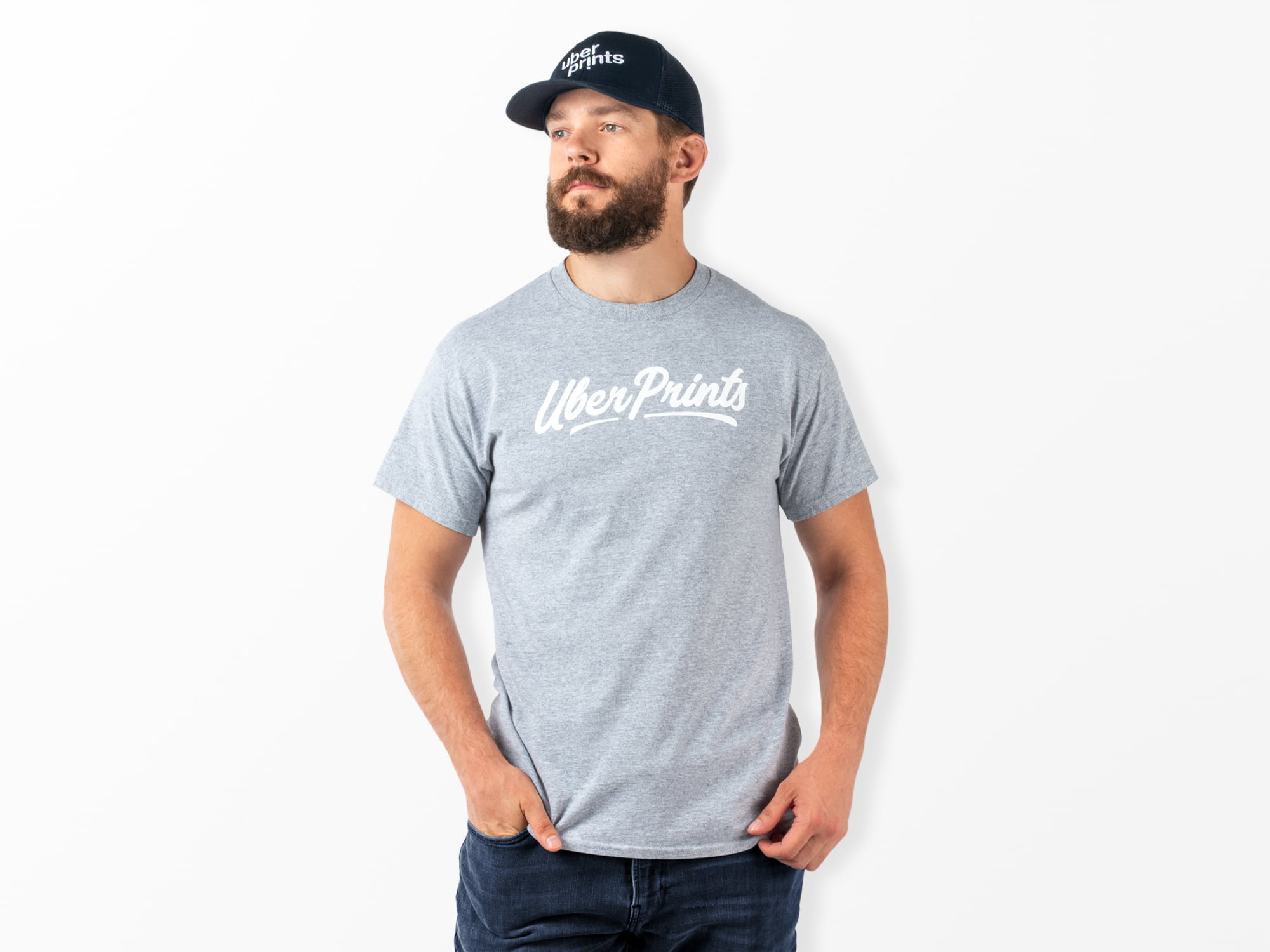
The Basic Tee is the Gildan Cotton Tee. It's 5.3 oz, 100% cotton, generously cut, and true to size. It's the shirt most people picture when they picture a custom t-shirt, and it's our best seller by a wide margin.
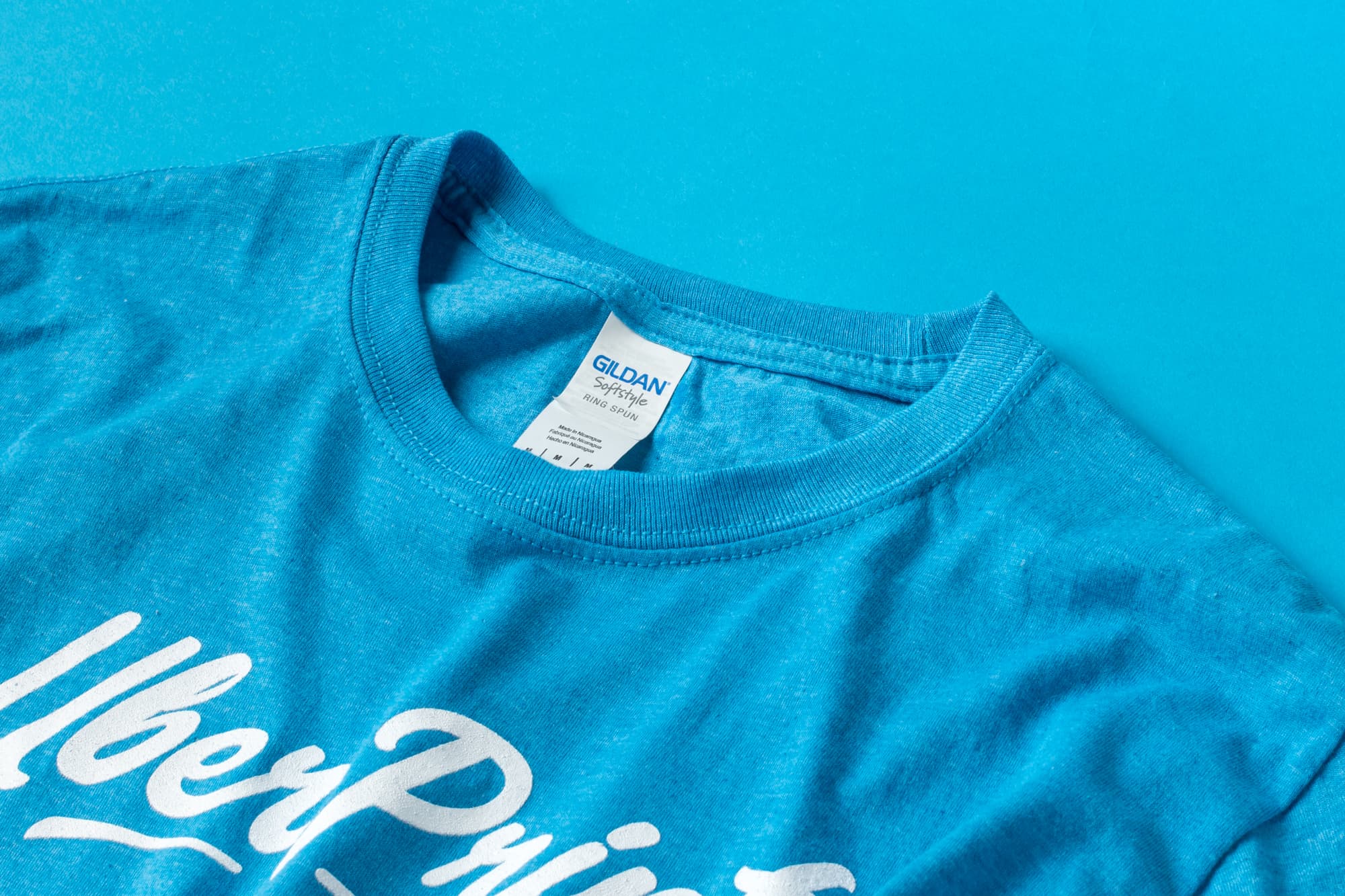
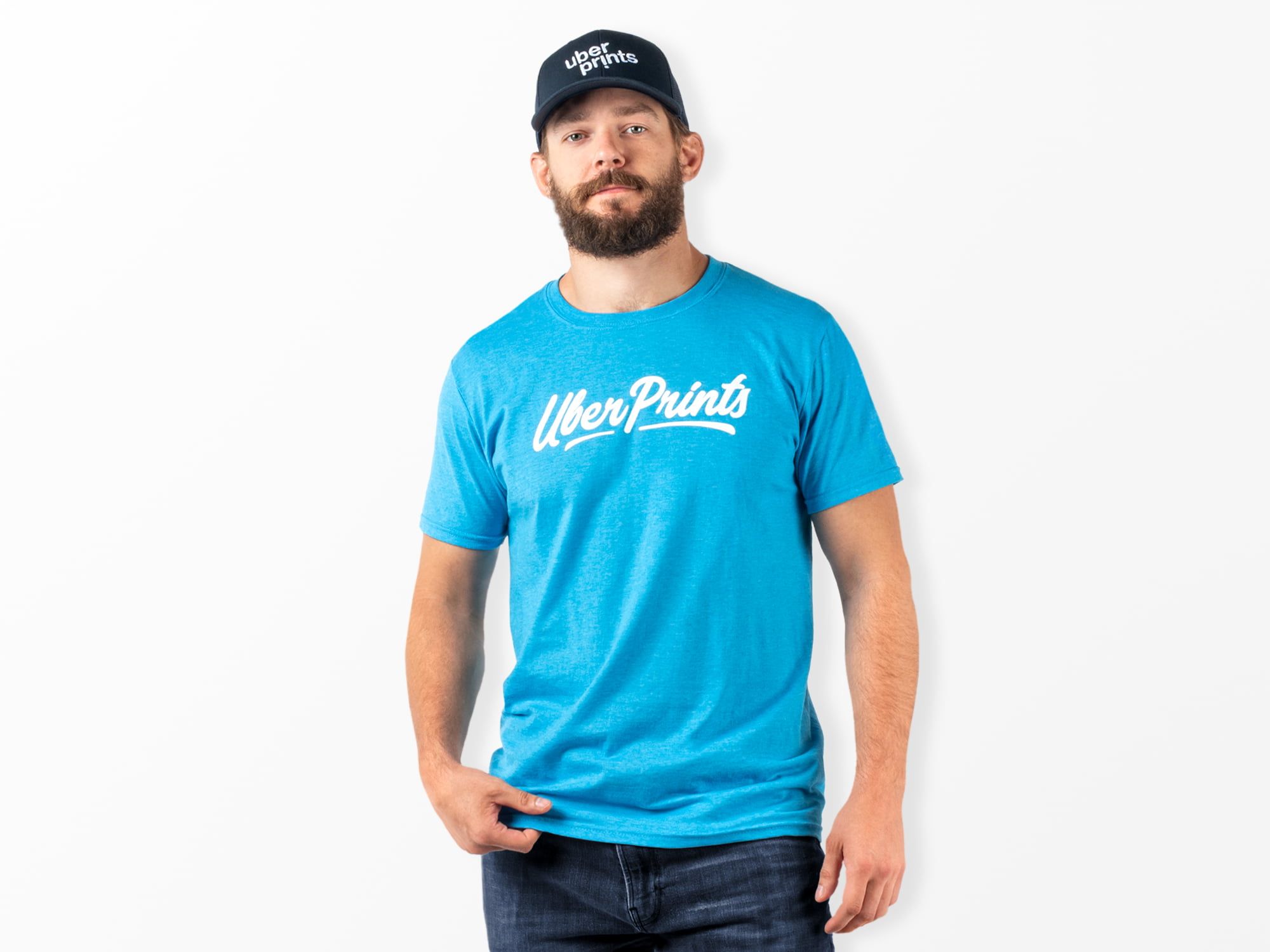
The Basic+ is the Gildan Softstyle. It's 4.5 oz, 100% ring-spun cotton, with shoulder-to-shoulder tape and a lightly fitted cut. Same manufacturer, same reliability, a meaningfully nicer hand feel.
| Basic Tee | Basic+ | |
|---|---|---|
| Blank | Gildan Cotton Tee | Gildan Softstyle |
| Weight | 5.3 oz | 4.5 oz |
| Cotton grade | 100% cotton | 100% ring-spun cotton |
| Fit | Generously cut, true to size | Lightly fitted, modern cut |
| Screen print colors | 73 | 65 |
| Digital print colors | 21 | 10 |
| Sizes | Youth XS – Adult 3XL | Youth XS – Adult 3XL |
| Best for | Giveaways, big events, tight budgets | Brands, small businesses, shirts meant to be worn again |
Both are available with screen printing at a 12-piece minimum and with digital printing at no minimum at all.
What does the extra dollar actually buy?
Yarn, mostly. And the difference is bigger than it sounds.
The Basic Tee uses standard cotton yarn. It's sturdy and it has that familiar substantial feel people associate with a classic tee. It's also the least processed cotton grade, which is exactly why it's the cheapest.
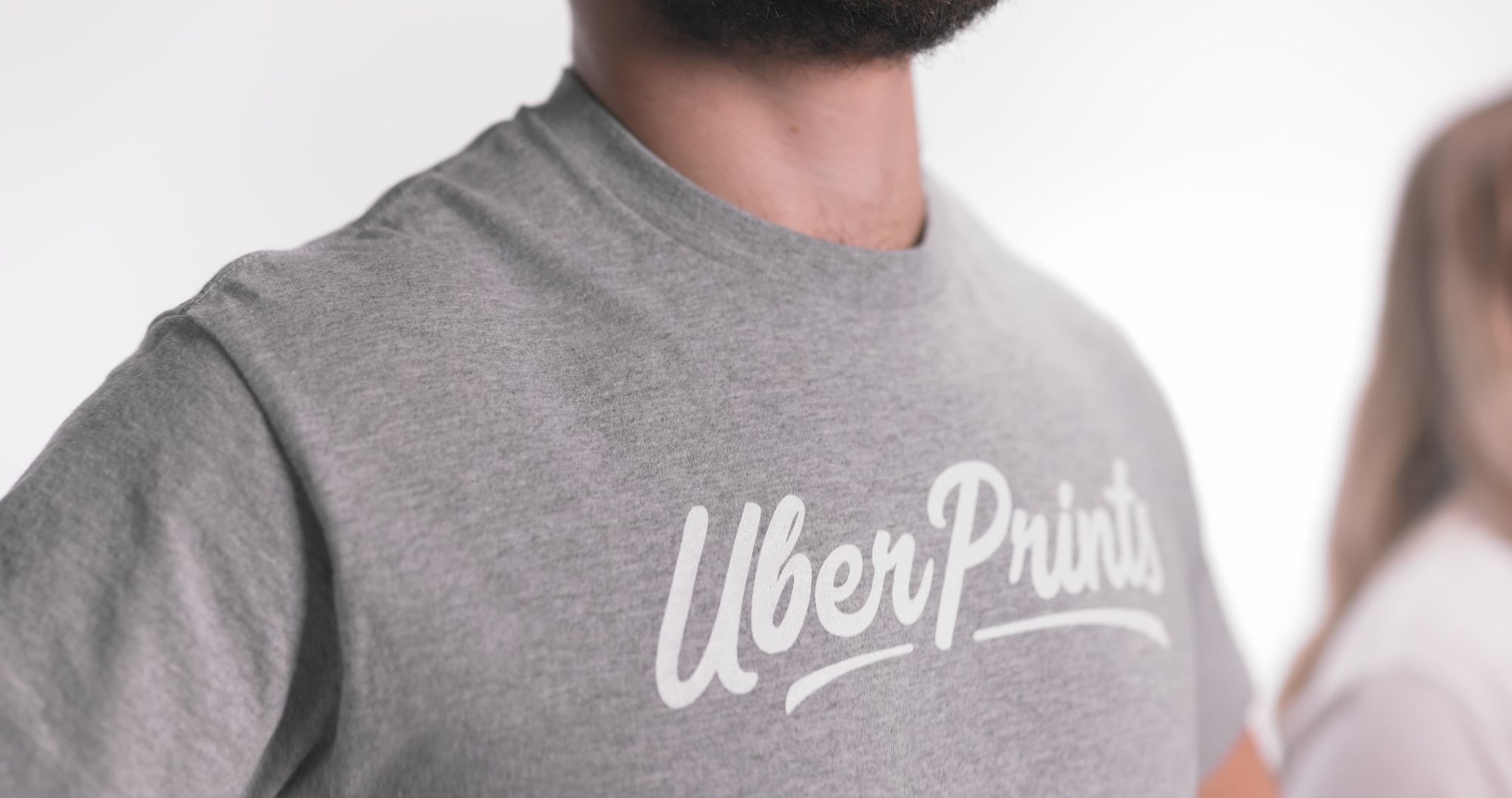
The Basic+ uses ring-spun cotton. Ring spinning twists and thins the cotton fibers continuously as the yarn is made, which produces a finer, smoother, stronger yarn. You feel that immediately — it's softer against your skin and the surface is smoother, which also means prints tend to feel better as well. Our complete t-shirt fabric guide walks through the full ladder of cotton grades if you want the deeper version.
Then there's weight. At 4.5 oz the Basic+ is about 15% lighter than the 5.3 oz Basic Tee. In a warehouse that sounds like nothing. On a person in August it's the entire difference between a shirt that gets worn and a shirt that gets folded.
Which one fits a group better?
This is where the instinct to always default to the cheaper shirt is worth questioning.
The Basic Tee is generously cut and runs true to size, and that's a real advantage when you're ordering for a crowd you can't measure. Boxy is forgiving. When you're buying 200 shirts for a 5K and you're guessing at the size spread, a forgiving cut means fewer people end up with something unwearable.
The Basic+ is cut closer through the shoulders and sleeves. It looks better on more body types in the sense that it looks intentional rather than issued, but it's less forgiving at the edges. For a group order it still works well. Just order a slightly wider size range and let people know it's a modern cut.
A simple way to decide. If the shirt's job is to identify people for one day, the Basic Tee does that job at the lowest possible cost. If the shirt's job is to represent you every time someone puts it on, spend the dollar.
Do you lose color options by going cheap?
Barely, and it goes the direction people don't expect.
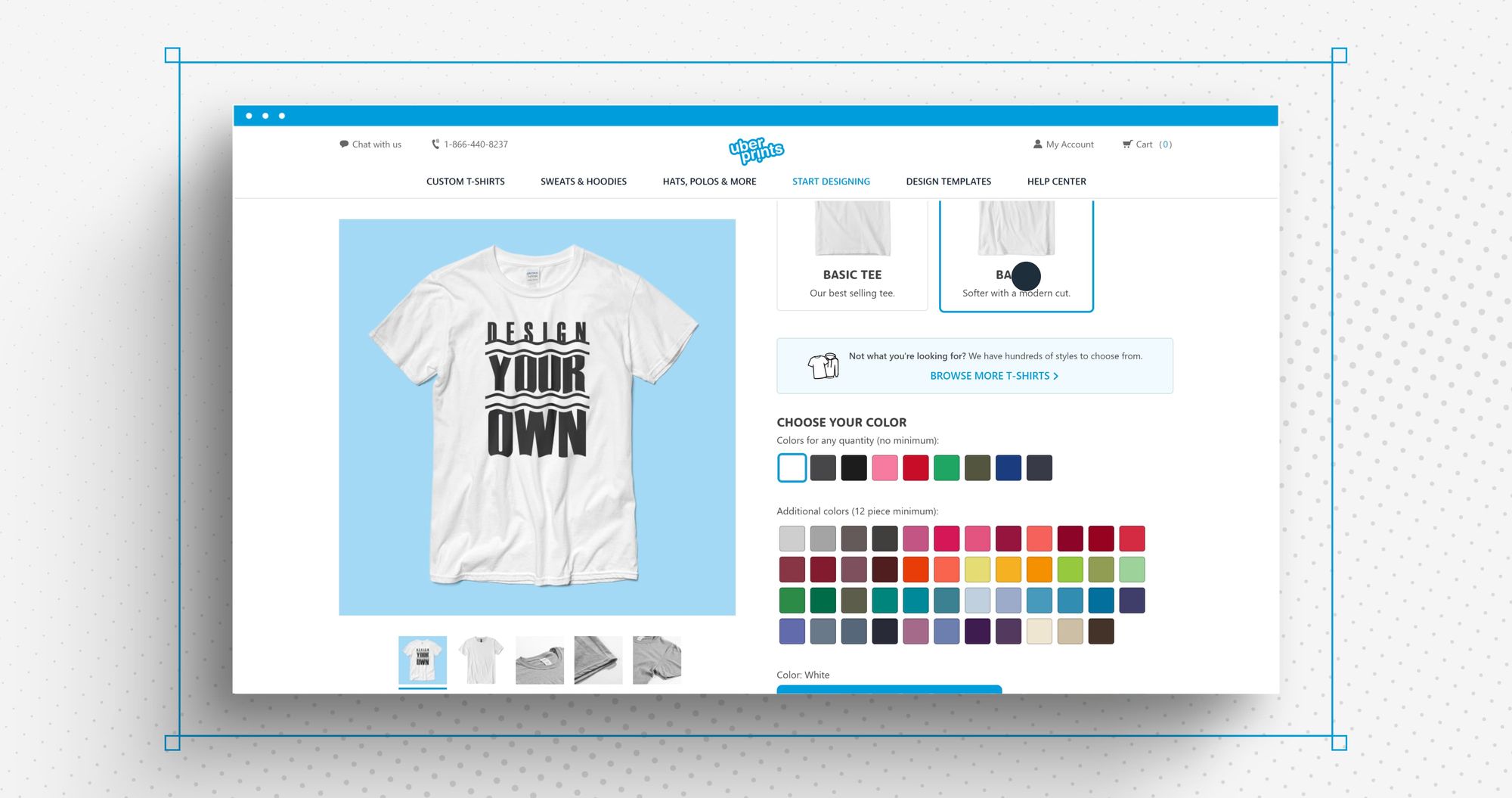
The Basic Tee actually has more colors than the Basic+ — 73 for screen printing versus 65, and 21 versus 10 for no-minimum digital printing. So one of the cheapest shirts we carry is also one of the most flexible on color.
Where this matters most is if you've got a specific brand color or a school color you have to hit. Check the Basic Tee first. There's a good chance the exact shade you need exists there and nowhere else in the budget tier.
One thing worth understanding, because it trips up almost every first-time buyer. The ink colors are priced completely differently depending on how we print. With screen printing, each ink color needs its own screen, so a three-color design costs more than a one-color design. With digital printing, color is free — a full-color photo costs exactly the same as one line of black text. If you're optimizing for price on a screen-printed order, dropping from three ink colors to one saves you more than switching shirts does.
How do I actually get the price down?
Switching blanks is the smallest lever you have. These are the bigger ones, roughly in order of impact.
- Order more of the same design. Quantity breaks apply automatically and they're steepest on screen printing. Going from 24 to 48 shirts moves your per-shirt price more than any fabric decision will.
- Cut ink colors. On a screen-printed order, every color is a separate screen and a separate setup. A one-color design on a light shirt is the cheapest print we do.
- Stick to one print location. Front only. Adding a back print adds real cost on every method.
- Print on white or light shirts. Dark garments often need an underbase layer of white ink beneath the design so the colors stay opaque, and that's an extra pass.
- Use our free clip art and templates. No art fees, ever.
We break this down further in our guide to all of the cost factors for your custom t-shirt order. And because quantity, shirt color, ink colors, print locations, and method all move the number together, the only way to get a real figure is to price your actual design. The quote in our design studio updates live as you build, and it doesn't ask for your email first.
Which shirt should you order?
Order the Basic Tee if you're outfitting a big event, running a giveaway, printing for a camp or a fundraiser, working against a hard budget ceiling, or you need a specific shirt color that only exists in the 73-color range.
Order the Basic+ if the shirt carries your brand, you're selling it rather than giving it away, your people will be wearing it in warm weather, or you want something that reads retail rather than promotional.
Look past both if neither is quite right. These two are our top picks for the budget category, not the whole range. If softness is the whole point, our super soft Premium Custom T-Shirts use combed and ring-spun cotton and are a real step up again. If you need fewer than twelve shirts, our No Minimum Custom T-Shirts print digitally with no quantity requirement at all. And our catalog has hundreds of other blanks if you want to browse the whole range of custom t-shirts.
A quick FAQ
What is the cheapest custom t-shirt at UberPrints? The Basic Tee, our Gildan Cotton Tee, is the lowest-priced custom t-shirt we carry. It's 5.3 oz, 100% cotton, available in 73 colors for screen printing, and its per-shirt price drops as your quantity goes up. Screen printing requires 12 pieces minimum.
What's the difference between the Basic Tee and the Basic+? The Basic+ is made from ring-spun cotton instead of standard cotton, which makes it noticeably softer and smoother. It's also 4.5 oz versus 5.3 oz, so it's lighter and more breathable, and it's cut slightly more fitted through the shoulders and sleeves.
How many custom t-shirts do I have to order? Screen printing requires a minimum of 12 shirts per design. Digital printing has no minimum, so you can order a single shirt. Both the Basic Tee and the Basic+ are available with either method.
Do cheap custom t-shirts print well? Yes. Both budget blanks take screen printing and digital printing cleanly. The Basic Tee's standard cotton surface is slightly less smooth than ring-spun, so extremely fine line work and small text land a touch crisper on the Basic+, but for typical designs you won't see a difference.
Is a lighter t-shirt lower quality? No. Weight and quality are separate things. The 4.5 oz Basic+ is lighter than the 5.3 oz Basic Tee and made from better cotton. Lighter usually means more breathable and more comfortable in heat, while heavier usually means more opaque and more durable-feeling.
Does ordering more shirts make them cheaper? Yes, significantly. Quantity breaks apply automatically and are steepest on screen printing, because setup work like color separation and burning screens gets spread across more pieces. The jump from 12 to 24 to 48 shirts moves your per-shirt price more than any other single choice.