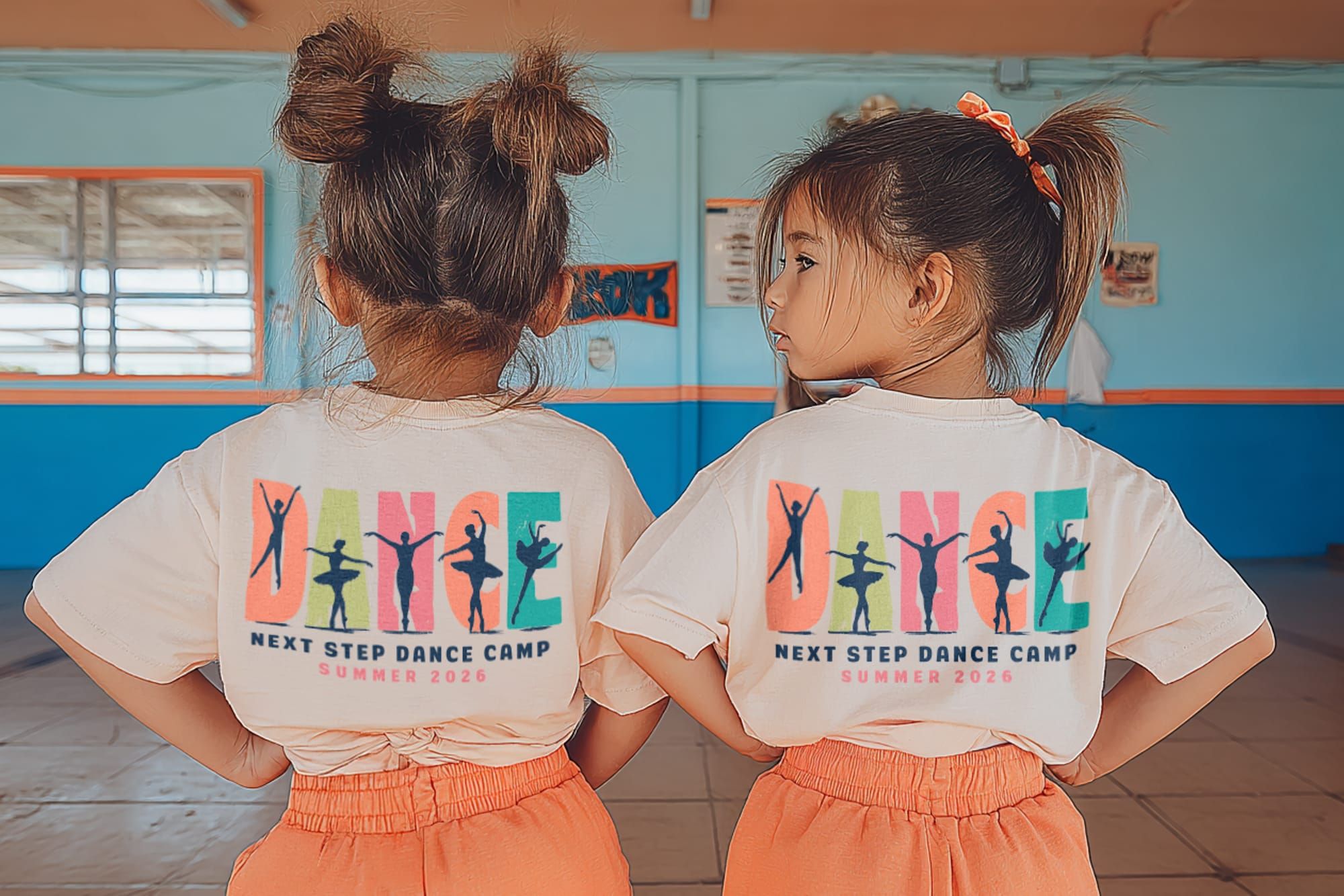

Dancers have style by vocation. They spend all day thinking about how bodies move through space, how lines look, how color and shape and proportion read from the back of a room. They wear studio clothes that match. They accessorize their warm-ups. They have opinions about every leotard, every pair of tights, and absolutely every t-shirt they put on their body. Which means a dance camp tee has to clear a higher style bar than most other camp shirts — because the audience is critiquing it from the second they see it hanging on the hanger.
The good news: when dance camp shirts land, they land hard. A well-designed one becomes a studio staple the dancer wears to every class for the next year, stuffed into the bottom of every dance bag, thrown on over leggings to head to auditions. The range is huge — dance camps run everything from four-year-olds in their first recital tutus to pre-professional teen intensives — but the design principles that separate a good dance camp shirt from a forgotten one are consistent across the board.
This guide covers design territory that works for dance camps across every style and age group: why the reworn shirt is the best marketing your camp can do, style-specific designs for ballet, hip-hop, contemporary, and more, dynamic silhouette-driven graphics, multi-style programs that honor every discipline, showcase and performance shirts, and the shirt styles that actually work in a studio and out of it.
The Reworn Shirt Is the Best Marketing You'll Ever Do
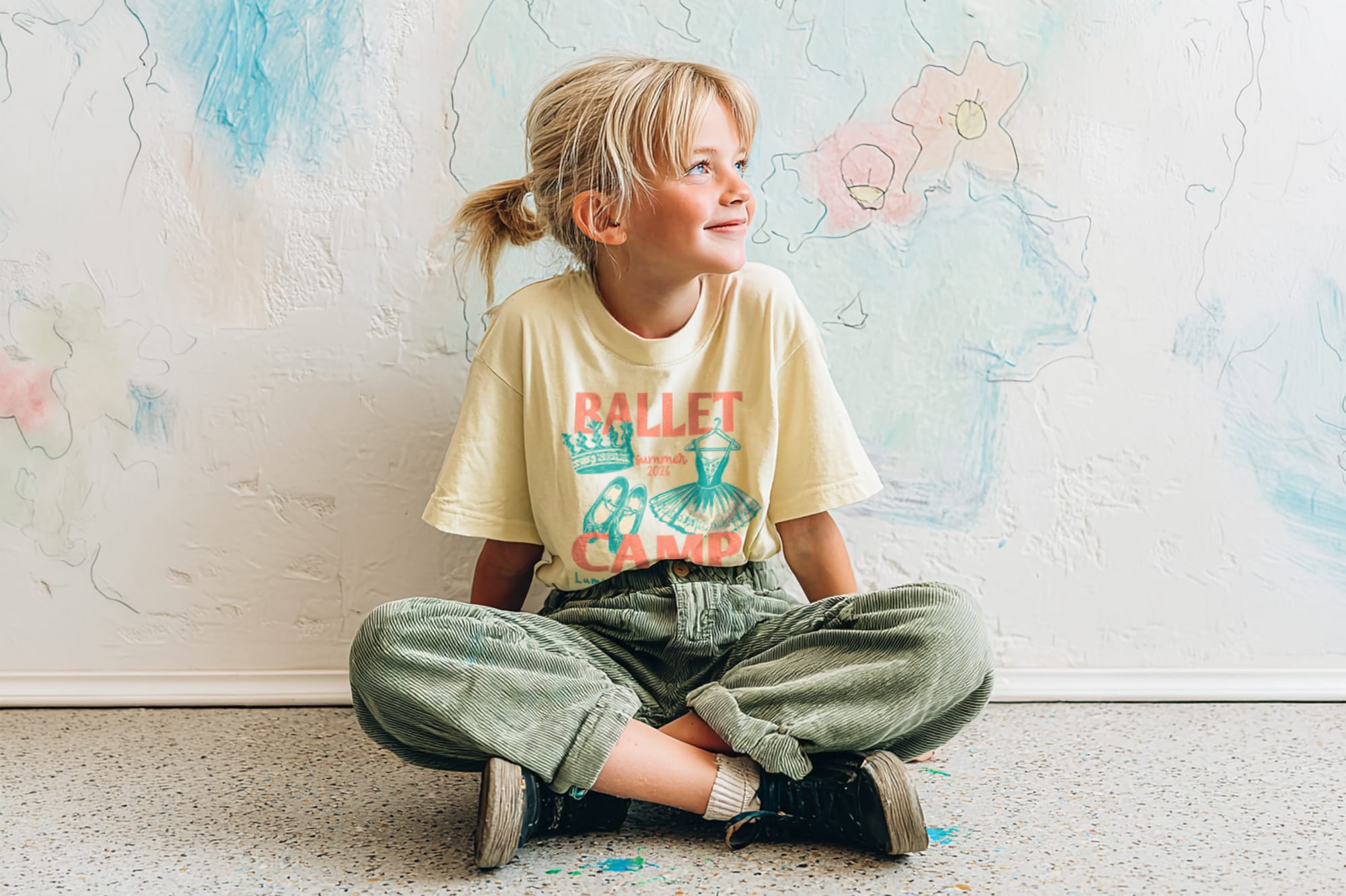
Here's the most important thing to understand about dance camp shirts, and it applies to every style and every age group: the shirt only builds your camp's reputation if dancers actually want to wear it after camp ends. A shirt that sits folded in a drawer does nothing for you. A shirt that gets worn to every class, to every audition, and to every other dance-adjacent event for the next two years is walking advertising from a credible source. The goal isn't a shirt that looks like camp apparel — the goal is a shirt that dancers choose to put on.
The designs that spread the word share a few traits. They don't look obviously like camp shirts — they look more like legitimate studio apparel, real dancewear brand merch, or genuine dance-culture pieces. They have a confident design identity that holds up outside the context of camp. They're printed on shirt styles dancers actually want to wear (soft tri-blends, pigment-dyed tees, fitted silhouettes) rather than stiff, plasticky blanks. And they carry enough style specificity — a real ballet aesthetic, real hip-hop energy, real contemporary sophistication — that the wearer is proud to explain where it came from when other dancers ask about it.
Every time a dancer wears their camp shirt to another studio, to a convention, to a summer intensive somewhere else, they're telling other dancers about your camp. That's the most valuable kind of word-of-mouth marketing there is — recommendations from one dancer to another, based on a shirt the recommender loves wearing. Design the shirt with that in mind and it stops being a line item and starts being a recruiting tool.
Browse dance camp t-shirt designs
Design tip: Ask yourself this question before finalizing: would a dancer wear this shirt to a different studio's class? If the answer is yes, you've nailed it. If the answer is 'maybe, if they were doing laundry,' keep refining.
Style-Specific Designs: Ballet, Hip-Hop, Contemporary, Jazz, Tap
Every style of dance has its own visual tradition, and a shirt that honors the specific style of the camp reads as far more authentic than a generic 'dance' shirt. Ballet, hip-hop, contemporary, jazz, tap, modern, lyrical — each style has its own typography, color palette, and design language, and matching the shirt to the form is one of the most meaningful design choices a camp director can make.
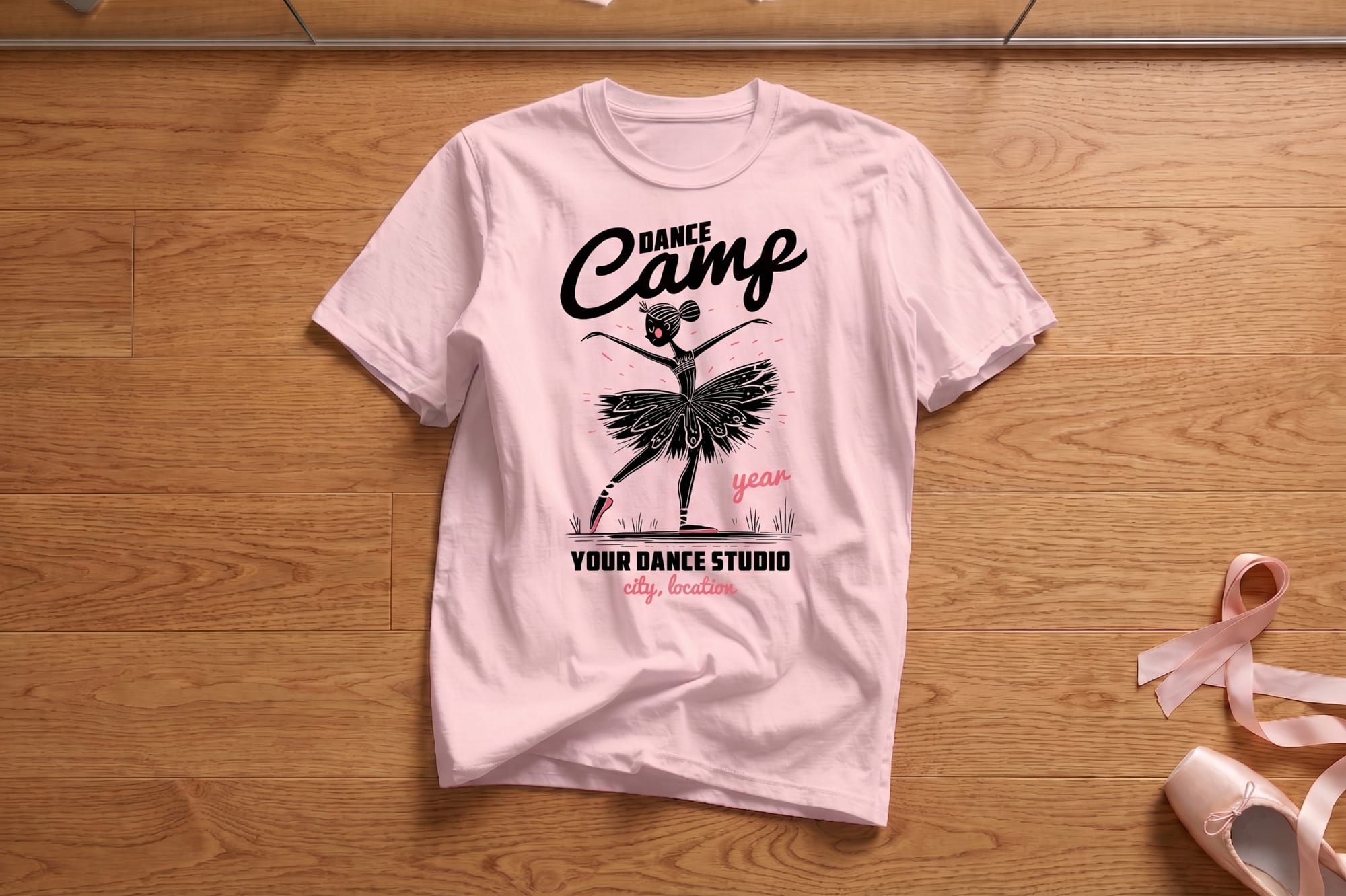
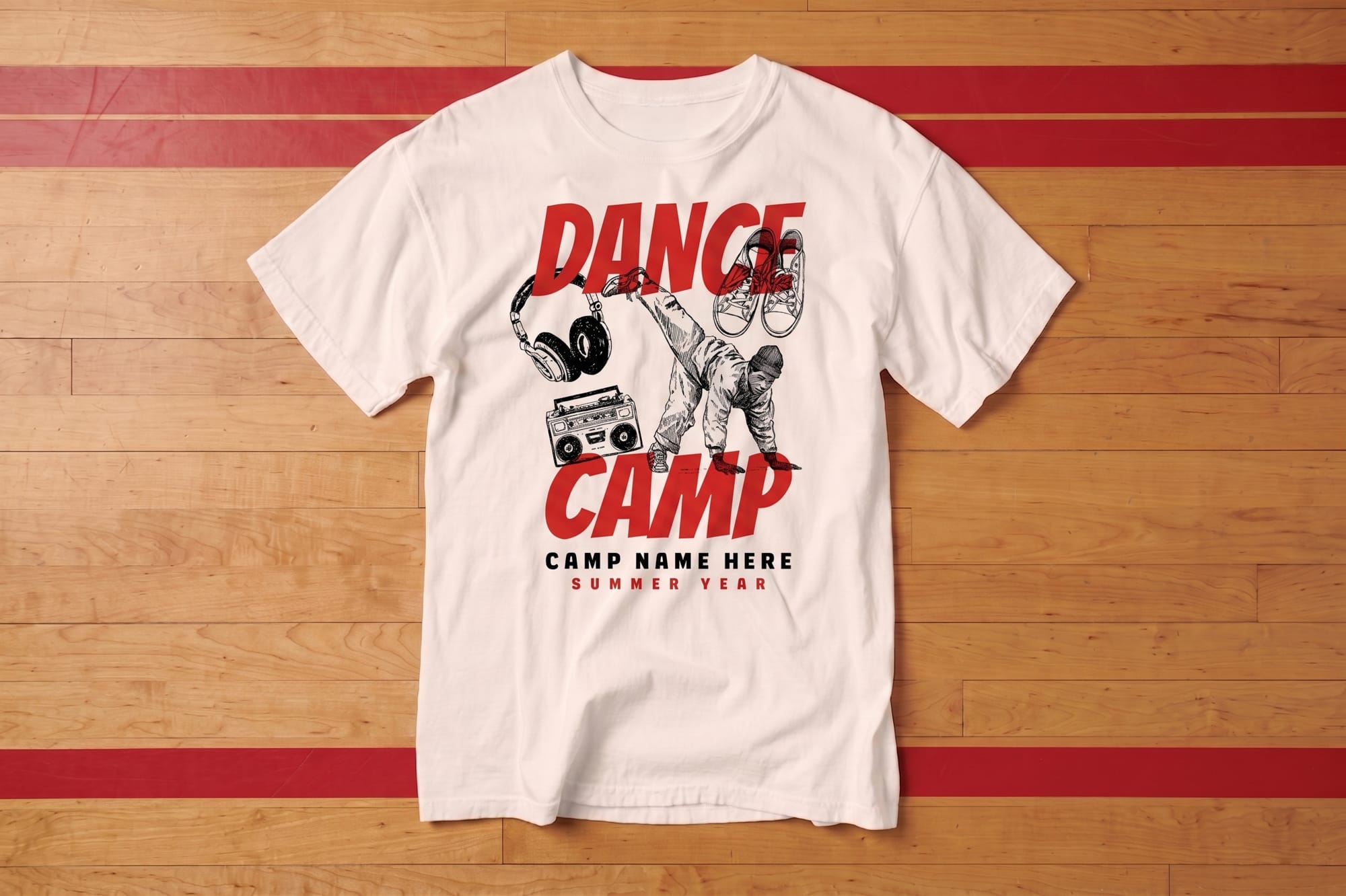
Ballet programs call for elegance: refined serif or script typography, pointe shoe silhouettes, muted sophisticated palettes (dusty rose, cream, soft gray, black, burgundy), and confident classical composition. Hip-hop programs call for bold graphic energy: street-culture typography, high-contrast color, graffiti-inspired lettering, layered urban design language, and shirt colors like black, bright red, or washed tones. Contemporary programs have the most creative latitude: abstract illustration, experimental typography, painterly elements, and sophisticated unexpected color combinations (burnt orange on sage, dusty lavender on cream).
Jazz and musical theater dance programs can borrow from Broadway aesthetics — bold lettering, marquee treatments, confident color. Tap programs look great with vintage-inspired design (art deco typography, mid-century patterns, black and cream palettes). The more specifically the shirt reflects the style, the more the dancers in that style feel genuinely seen.
Style tip: Look at the studio walls — what aesthetic is already there? What posters, photos, and visual references live in the space? A camp shirt that feels like it belongs in the studio is one the dancers will wear back to that studio every day.
Dynamic Dancer Silhouettes
Across every style of dance, the single most reliable front-of-shirt design is the dancer silhouette. A strong illustration of a dancer mid-movement — the line of an arabesque, the extension of a grand jeté, the shape of a freeze, the silhouette of a turn — captures something about the art form in a way that typography alone can't. And because dance is fundamentally about movement through space, a dynamic silhouette reads immediately as 'dance' from across a room.
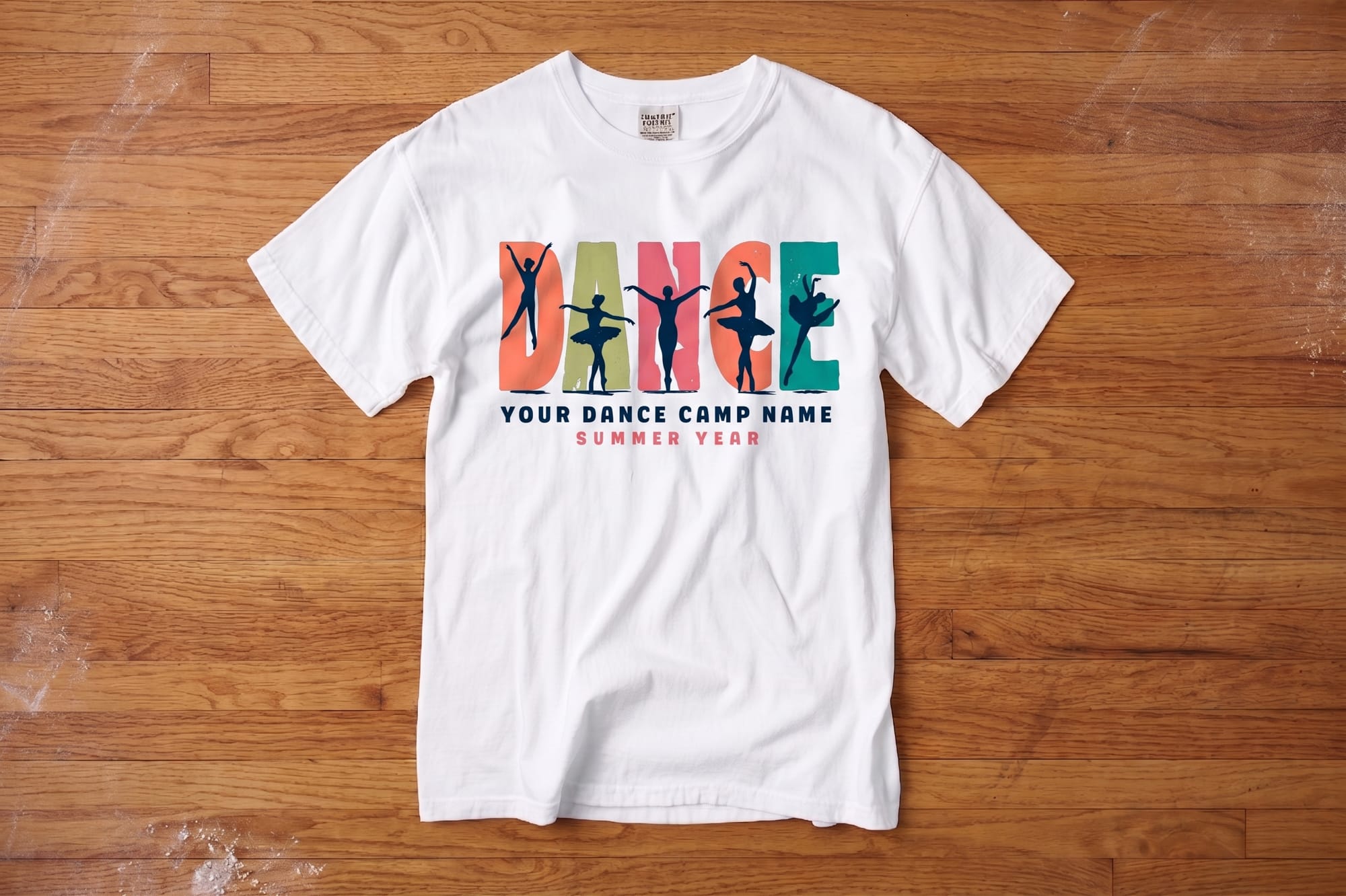
The strongest silhouette designs are specific rather than generic. A clearly recognizable pose from the style of dance the camp focuses on — a proper first arabesque for ballet, a clearly executed freeze for hip-hop, an identifiable contraction for contemporary — reads as authentic to dancers of that form. Hand-illustrated silhouettes with real artistic line quality outperform clip-art silhouettes every single time; dancers notice the difference between a drawing made by someone who watches dance and one generated by a stock library.
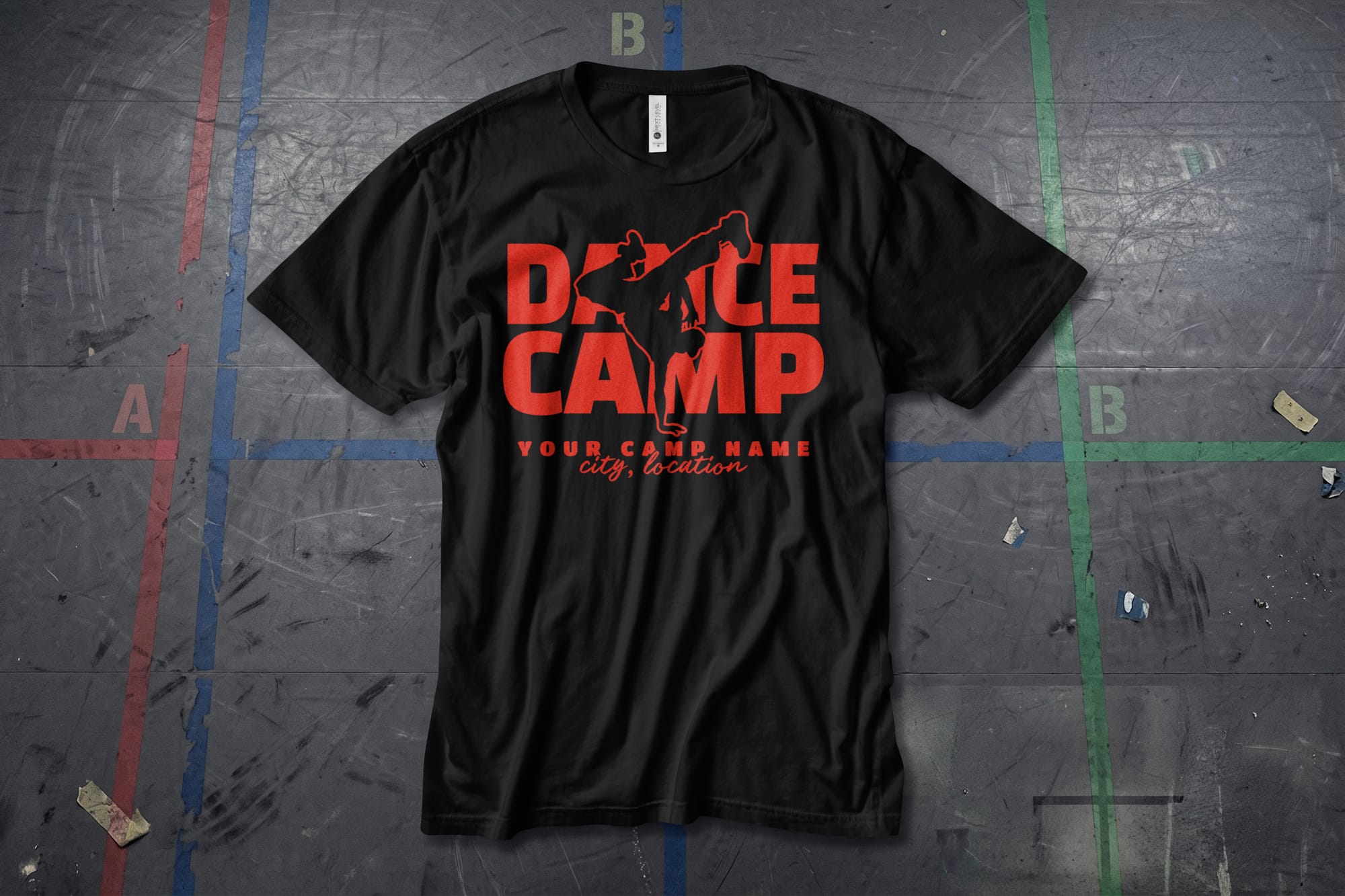
For a younger camp, silhouettes can be softened — a rounder, friendlier dancer figure, sometimes illustrated as a character or mascot rather than a realistic form. A tiny cartoon ballerina, a dancing animal character in a tutu, or a bright stylized dancer figure all work beautifully for the youngest age groups, where recognizability and joy matter more than anatomical precision.
Design tip: If you're working from a photo reference, trace the outline of a real dancer rather than using stock silhouettes. Real dancer proportions and line quality look dramatically better than idealized stock figures — and any dancer will notice the authenticity immediately.
Multi-Style Programs: Honoring Every Discipline
Many dance camps run multiple styles under one roof — a camper might take ballet in the morning, hip-hop at midday, and contemporary in the afternoon. The shirt has to make every style feel represented without becoming a cluttered mess that doesn't commit to any of them. This is genuinely one of the trickier design challenges in camp apparel, and there are two approaches that consistently solve it.
Approach one: a clean, unifying front design (the camp name, a single confident graphic element, a universal dance silhouette) with a back design that lists every style taught at camp. Ballet. Jazz. Contemporary. Hip-Hop. Tap. Modern. Lyrical. Musical Theater. Typeset the list with real typographic care — proper alignment, consistent spacing, a clear hierarchy — and it becomes one of the most beloved shirt backs in the entire category. Dancers read the list and feel every discipline they work in.
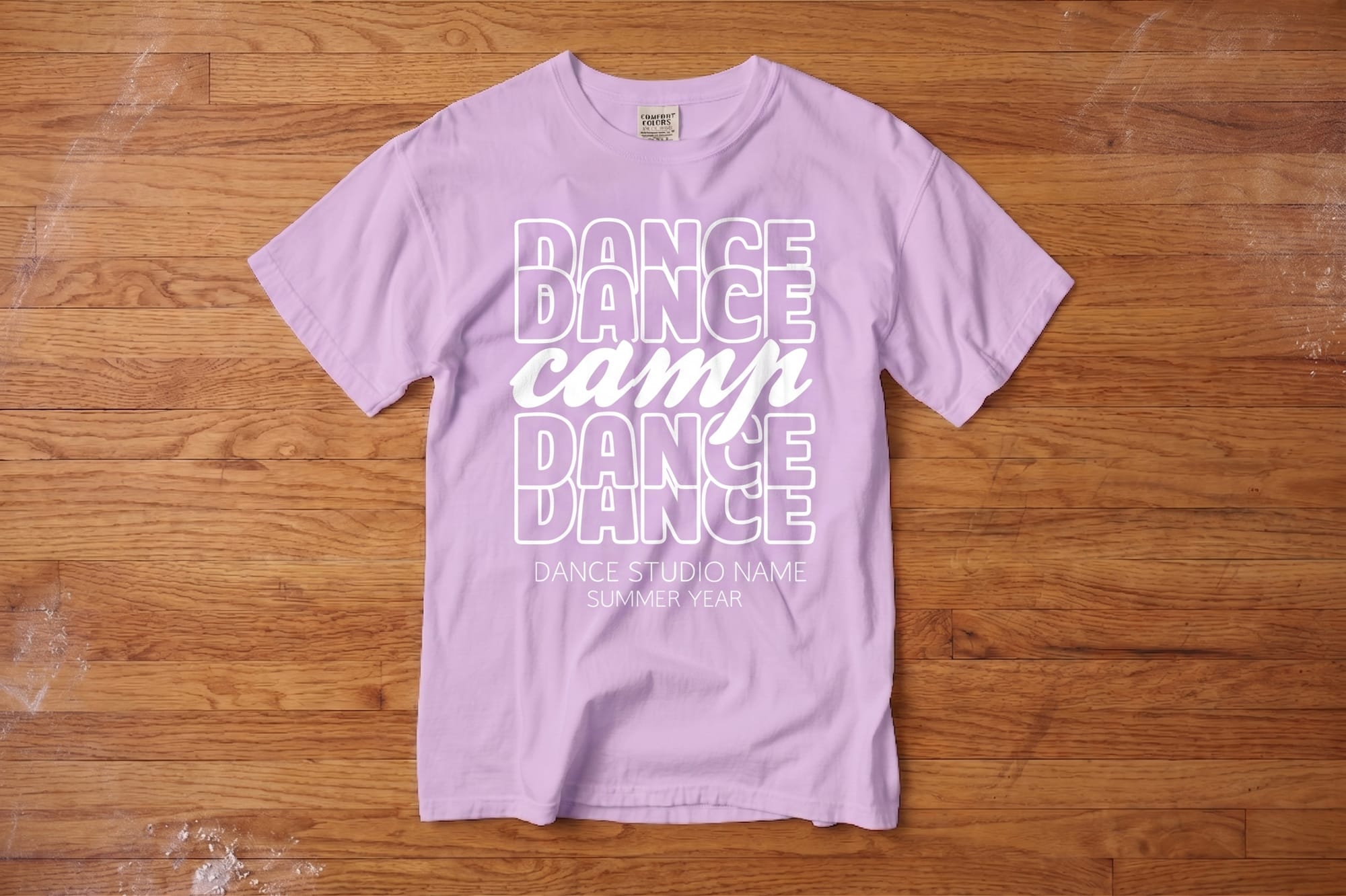
Approach two: a design that visually incorporates multiple styles at once — a composite illustration of silhouettes from different dance forms, a typographic treatment where each style gets its own letter or word, a layered design where each element references a different discipline. This takes more design work to execute cleanly but produces a shirt that feels genuinely specific to a multi-style program.
Back design tip: If you list styles on the back, list them all the same size. The minute one style gets bigger type than another, the dancers in the smaller-type styles will notice. Equal treatment is non-negotiable for this category.
Showcase and Performance Shirts: The Second Piece of Merch
Here's a move that dance camps can pull off better than almost any other camp type: the second shirt. A standard camp tee that campers wear throughout the session, plus a separate showcase or performance shirt designed specifically around the final performance or a signature piece. Two distinct shirts, two distinct pieces of the summer, both worn for years afterward.
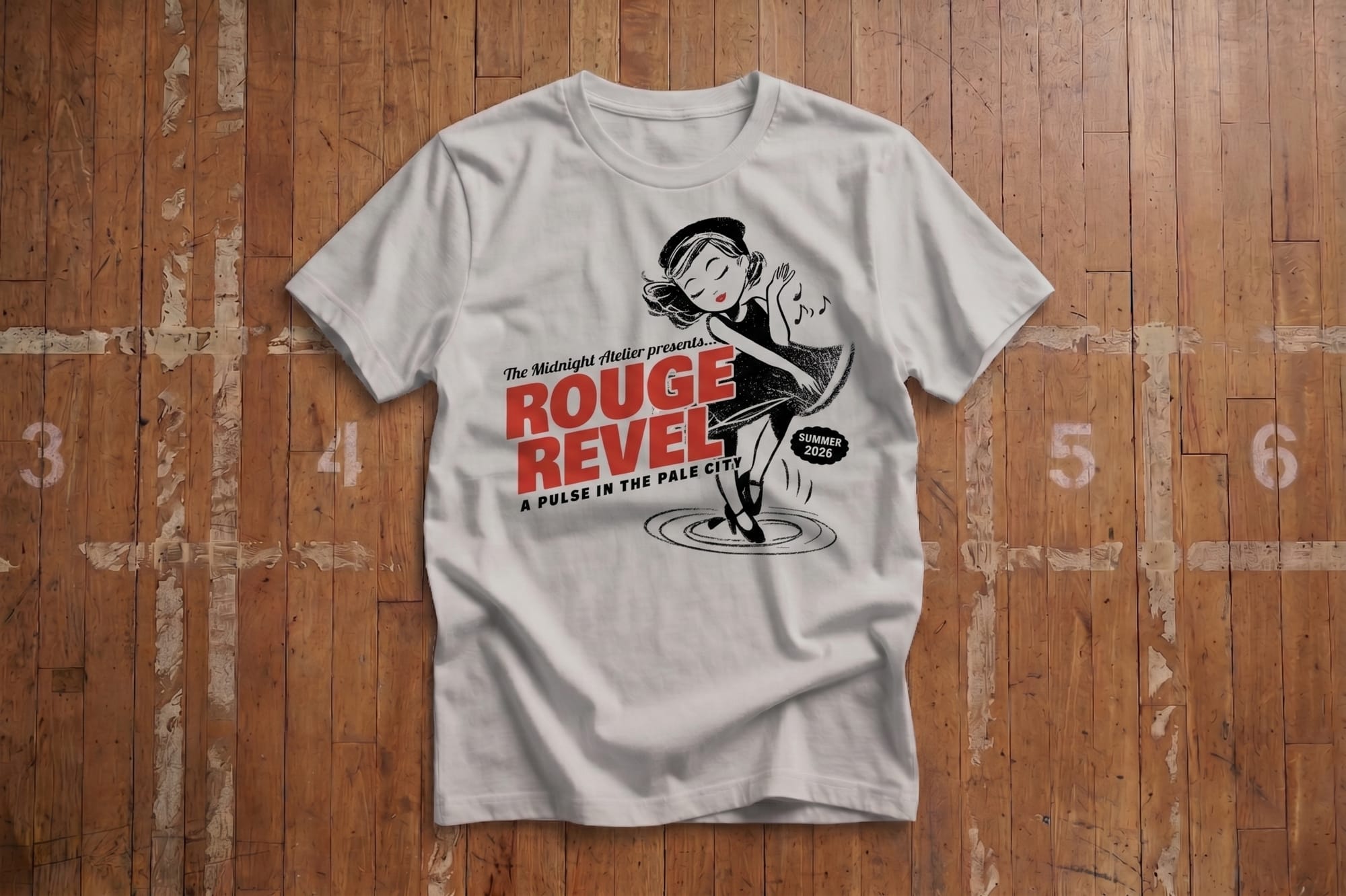
The performance shirt typically has a more polished, merch-like quality — often featuring the name of the final piece, the performance date, the choreographer, or artwork built around the show's concept. For camps that build the session around specific repertoire (a Balanchine variation, a Fosse intensive, a hip-hop showcase, a contemporary work), the performance shirt becomes genuine merchandise for the production — which dancers collect, keep, and wear with real pride.
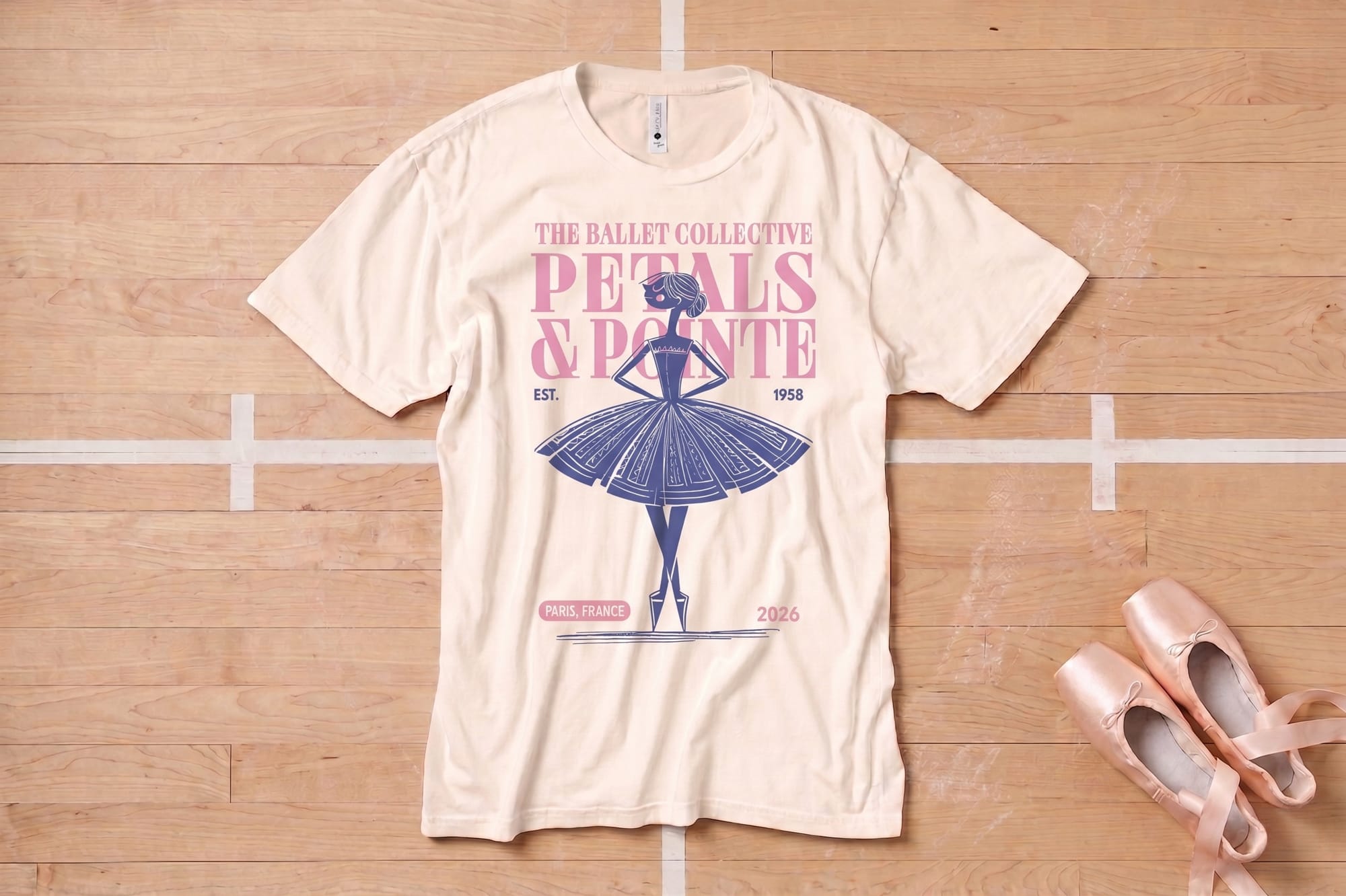
The two-shirt approach also solves a practical problem: the camp tee gets worn in class and gets sweaty, stretched, and studio-worn. The performance shirt is the one saved for special occasions — auditions, performance days, the first day of dance class in the fall. Dancers keep both shirts forever and wear them for completely different reasons.
Timing tip: Reveal the performance shirt at the final showcase — after the final bow, not before. The theatrical timing of the moment makes the shirt part of the performance itself, which dancers remember for years.
Shirt Styles That Work in the Studio (and Out)
Dance shirts have to work in a specific, demanding context: over a leotard, under a warm-up jacket, tied at the waist during barre, pulled off mid-class when it gets hot. The fabric has to move. The cut has to sit right. Stiff, boxy, plasticky blanks don't survive a dance studio — both literally and stylistically. Choosing the right shirt style is half the design decision for this category.
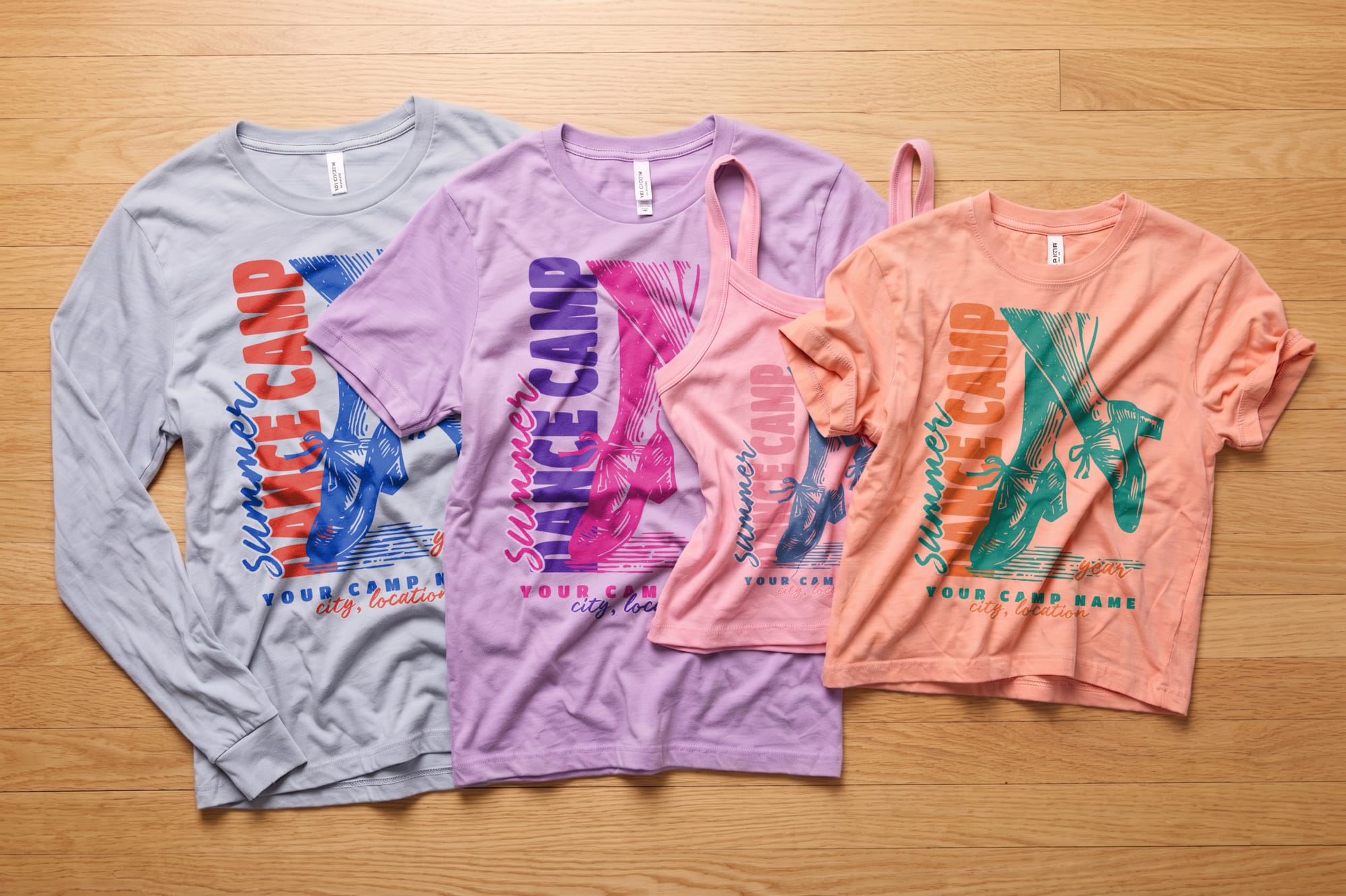
Soft tri-blends (cotton/poly/rayon) and pigment-dyed tees are the workhorses of dance camp apparel — they're soft against the skin, they drape well over dance wear, they age beautifully, and they match the studio aesthetic. Fitted or semi-fitted silhouettes generally outperform boxy classic crews for this audience, especially for older dancers. For ballet programs and classical camps, a slightly dressier soft crew in a refined color works beautifully. For hip-hop and contemporary, a relaxed oversized fit reads as intentional and current.
Cropped tees are worth considering for older dance camps — they've become a studio staple across every style of dance, and a camp shirt in a cropped cut often gets worn harder than any other piece of camp merch. For winter sessions, longer cooler-weather pieces, or as counselor apparel, long-sleeve versions of the camp shirt extend the wearability substantially. Many dance camps order both: a standard tee and a long sleeve in the same design.
Fit tip: If your camp is a pre-professional or teen intensive, consider offering a fitted or semi-fitted option alongside the standard crew. Older dancers will almost always choose the fitted version — and they'll wear it more.
What You Can Customize
Every dance camp shirt from UberPrints is fully customizable. In the Design Studio, you can adjust:
• Camp name, year, and location
• Colors — shirt color, ink colors, and ink placement
• Fonts and typography treatments (elegant scripts for ballet, bold graphics for hip-hop, refined serifs for classical)
• Camp logo, dancer silhouettes, or original artwork (upload your own or build from our clipart library)
• Camper or staff names on the back
• Dance style designations or discipline lists for the back
• Performance or showcase titles, dates, and choreographer credits
• Shirt style — classic crew, fitted tee, cropped tee, pigment-dyed, tri-blend, long sleeve, tank, and more
No design experience required. You can start from a template, upload existing artwork, or build the whole thing from scratch in the Design Studio — and the team is one click away if you want a human to look at it before you place the order.
When to Order Your Dance Camp Shirts
Six to eight weeks before your session starts is the sweet spot. Our standard turnaround for screen printing is 7 to 10 business days, plus shipping time — so planning ahead gives you room to collect sizes, finalize the design, and have the shirts in hand comfortably before the session begins. Four weeks is workable for a standard order. Under two weeks is where rush options become relevant.
If you're ordering both a camp tee and a separate showcase shirt, plan the production in two batches — the camp tee before the session starts, and the showcase shirt in time for the final performance. Many dance camps run this exact timeline every summer. Free shipping kicks in at $100, which most dance camp orders clear easily. Bulk pricing on screen printing drops the per-shirt cost meaningfully at 24 or more, which is the sweet spot for volume and quality.
See bulk pricing and shipping details
Ready to Design Your Dance Camp Shirts?
Dance camp is where dancers find the other kids who feel music in their bodies the same way they do. It's where they work harder than they work anywhere else, learn the choreography that stays with them, and build the friendships that last well past the summer. The shirt is what comes home — worn to every class in the year that follows, stuffed in the bottom of every dance bag, pulled out years later with a specific smile of recognition.
UberPrints makes it easy to design a shirt your dancers will actually want to wear. Design Studio, bulk pricing, soft shirt styles that work in and out of the studio, and a team that's there if you want a second pair of eyes before you order. Design something your dancers will wear back to class, to auditions, and to every dance-adjacent thing they do for the next several years — and let the shirt do what great dance camp apparel does best.
Start your dance camp shirt design at UberPrints
Related guides:
Summer Camp T-Shirts — Design Ideas for 11 Camp Types
Cheer & Gymnastics Camp T-Shirt Design Guide
Theater & Drama Camp T-Shirt Design Guide
Music Camp T-Shirt Design Guide
Frequently Asked Questions
What are good design ideas for dance camp t-shirts?
The strongest dance camp shirts use intentional, disciplined design — bold dancer silhouettes, style-specific typography, and considered color palettes. Ballet programs call for elegant serifs and refined palettes, hip-hop programs work best with bold graphic energy, and contemporary programs have room for creative unexpected treatments. For multi-style programs, a clean front design paired with a back listing every style taught is one of the most beloved formats.
How can a t-shirt help market my dance camp?
A well-designed camp shirt is one of the best marketing investments a dance camp can make — but only if dancers actually want to wear it after the session ends. Shirts that get worn to other studios, to conventions, to intensives, and to auditions are walking recommendations from credible sources (the dancers themselves). Design the shirt to look more like legitimate studio apparel than traditional camp swag, print it on fabric dancers actually want to wear, and every reworn shirt becomes organic word-of-mouth marketing for your program.
How do I design a dance camp shirt for a specific style like ballet or hip-hop?
Match the design language to the style. Ballet camps call for refined script or serif typography, pointe shoe silhouettes, and muted sophisticated palettes (dusty rose, cream, burgundy, black). Hip-hop camps call for bold graphic lettering, high-contrast color, and street-culture energy. Contemporary camps have the most creative latitude — abstract illustration, experimental typography, unexpected palettes. The more specifically the shirt reflects the style, the more authentic it reads to the dancers in that form.
What color t-shirt works best for a dance camp?
Black is the most versatile default — it works across every style, pairs with any dancewear, and makes bold graphics pop. Dusty rose, cream, and soft gray work beautifully for ballet and classical programs. Deep burgundy, forest green, and washed navy work for contemporary. Hip-hop camps can push into brighter or high-contrast colors. Avoid bright, saturated primaries unless you're working with a very young age group — older dancers consistently prefer more sophisticated palettes.
What design works for a multi-style dance camp?
The two strongest approaches: first, a clean unified front design paired with a back that lists every style taught at camp (ballet, jazz, contemporary, hip-hop, tap, modern) typeset with equal treatment. Second, a composite design that visually incorporates multiple styles — silhouettes from different forms, or a typographic treatment where each discipline is represented. Both approaches give every dancer a sense of representation while holding the camp together as one program.
Should I order a separate shirt for the final performance or showcase?
Many dance camps do — it's one of the most beloved traditions in the entire category. A standard camp tee worn throughout the session plus a separate showcase shirt designed around the final performance creates two distinct pieces of camp apparel, both treasured and worn for different reasons. The showcase shirt tends to have a more polished, merch-like feel and often becomes the shirt dancers wear to auditions and special occasions.
What's the best shirt style for dancers?
Soft tri-blend tees and pigment-dyed shirts are the workhorses of dance camp apparel — they're soft against the skin, they drape well over dancewear, and they age beautifully. Fitted or semi-fitted silhouettes outperform boxy classic crews for this audience. Cropped tees have become a studio staple across every style of dance and are worth offering for older camps. Long-sleeve versions extend wearability for cooler sessions or ballet warm-ups.
How many dance camp shirts should I order?
Order one shirt per camper and staff member, plus 10 to 15 percent extra for latecomers, size swaps, and last-minute additions. Collect size preferences at registration so your breakdown is accurate. For mixed youth-and-adult programs, a common split is roughly 20% youth, 15% small, 25% medium, 25% large, 10% XL, and 5% 2XL — adjust based on actual enrollment.
How long does it take to produce dance camp shirts?
Our standard turnaround for screen printing is 7 to 10 business days, plus shipping time. For bulk orders of 24 or more — which is where most dance camps land — screen printing is the recommended technique for durability, pricing, and the crisp print quality dance shirts benefit from. Order six to eight weeks before your session for comfortable timing, four weeks for a standard order, or contact us about rush options if your timeline is tighter.